Author: Jared

  • Best Countertop Ice Makers in 2026

    Best Countertop Ice Makers in 2026

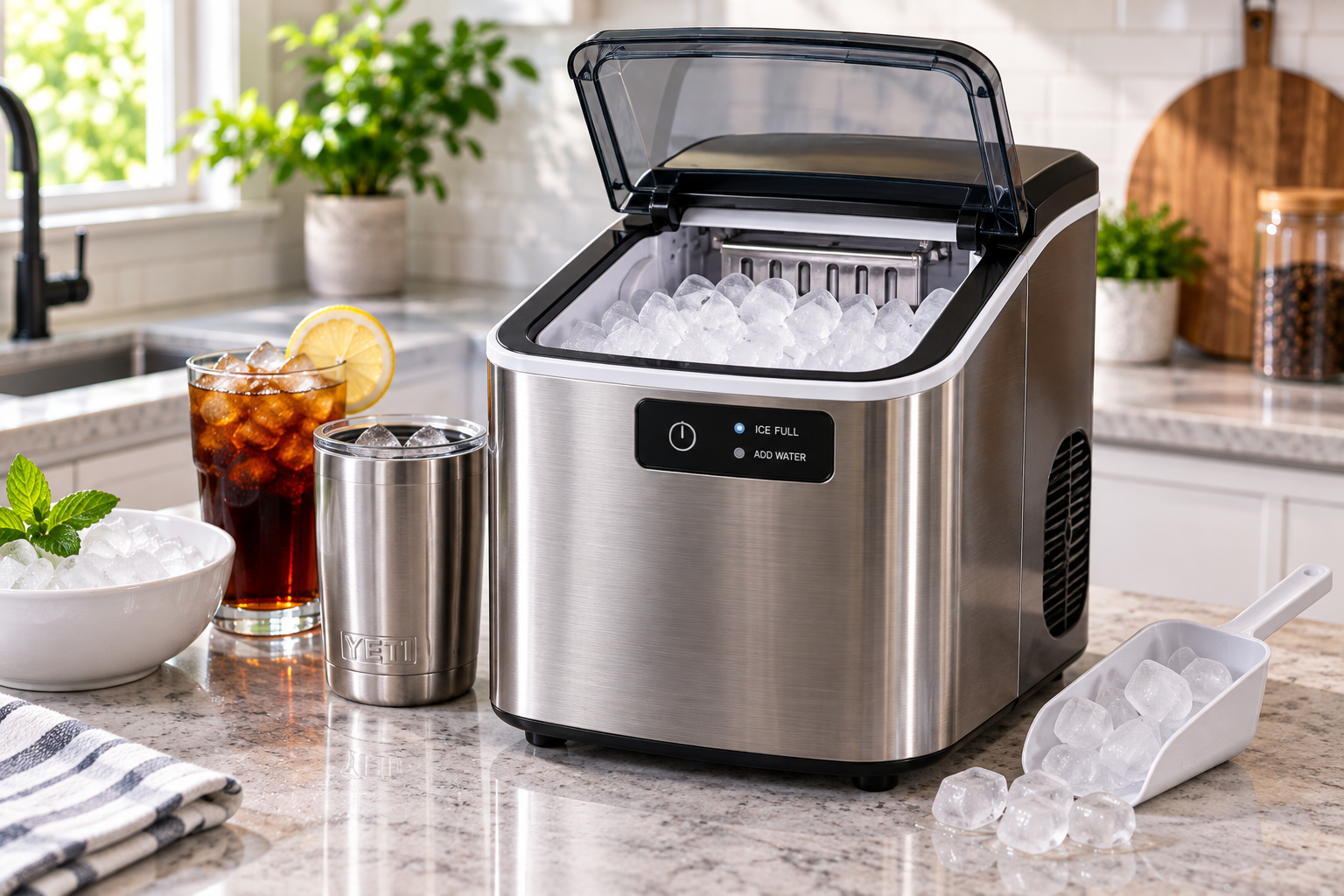
    If your refrigerator never seems to keep up with your household’s ice needs, a countertop ice maker can be a surprisingly useful appliance.

    They are especially handy for entertaining, summer use, home bars, RV trips, offices, and households that simply go through more ice than a standard freezer bin can provide.

    The best countertop ice maker for you depends less on marketing and more on one simple question:

    Do you want pebble-style nugget ice, or are you perfectly happy with standard bullet-style ice?

    That one decision narrows the field quickly.

    Quick Picks

    Best Overall: GE Profile Opal Nugget Ice Maker
    Best Value: Igloo Countertop Ice Maker
    Best Premium Alternative: Ninja NeverClog Ice Maker
    Best for Entertaining: Frigidaire Countertop Ice Maker
    Best Compact Choice: Silonn Countertop Ice Maker


    Best Overall: GE Profile Opal Nugget Ice Maker

    If what you really want is chewable nugget ice, the GE Profile Opal line remains one of the most recognizable countertop choices.

    It is expensive compared with basic countertop models, but buyers looking specifically for nugget ice usually are not shopping in the same category as basic budget machines.

    Why we like it

    It fits the buyer who knows exactly what they want and is willing to pay more for a more enjoyable ice experience.

    Best for

    Households that love nugget ice and are willing to pay premium-appliance pricing for it.


    Best Value: Igloo Countertop Ice Maker

    Not everyone needs premium nugget ice.

    If your goal is simply making extra ice quickly and conveniently, an Igloo-style countertop machine is often the better value.

    Why we like it

    These machines are usually much less expensive, easier to justify, and perfectly useful for everyday drinks, gatherings, and backup ice production.

    Best for

    Buyers who want more ice at home without spending premium money.


    Best Premium Alternative: Ninja NeverClog Ice Maker

    Ninja’s countertop ice maker enters the category with strong consumer interest because the brand already has credibility in the kitchen-appliance space.

    It is especially appealing to people who prefer buying from a brand they already know from air fryers, blenders, or cooking appliances.

    Why we like it

    Brand familiarity matters in countertop appliances. People are often more comfortable buying a more expensive machine from a brand they already trust.

    Best for

    Shoppers who want a premium countertop machine from a strong mainstream kitchen brand.


    Best for Entertaining: Frigidaire Countertop Ice Maker

    Frigidaire-style countertop models are popular for parties, gatherings, casual entertaining, and general household overflow.

    Why we like it

    This type of machine makes sense for people who regularly need more ice than their refrigerator can provide, but who do not necessarily need high-end nugget ice.

    Best for

    Families, entertaining, holiday hosting, and regular kitchen overflow use.


    Best Compact Choice: Silonn Countertop Ice Maker

    Some of the most popular countertop ice makers are compact models aimed at apartments, dorm-like spaces, RV use, and smaller kitchens.

    Silonn-type machines fit that niche well.

    Why we like it

    If counter space is limited, a smaller machine may be the right answer even if it is not the most premium one available.

    Best for

    Smaller kitchens, limited counter space, and buyers who care most about convenience and compact size.


    How to Choose a Countertop Ice Maker

    Nugget ice vs bullet ice

    This is the first and biggest decision.

    Nugget ice is softer, chewable, and more premium-feeling. It also usually costs more.

    Bullet ice machines are more affordable and practical for buyers who just want extra ice on demand.

    Counter space matters

    Measure before you buy.

    Some countertop machines are compact enough for casual use, while others are large enough that they effectively claim a permanent section of your counter.

    Think about how you will use it

    Are you buying it for:

    • daily household use,
    • summer drinks,
    • parties and entertaining,
    • office use,
    • or an RV or vacation setup?

    That affects the best choice.

    Noise and maintenance

    Countertop ice makers are appliances you hear, not just appliances you see.

    Also remember that descaling, draining, and routine cleaning matter. A machine that is easy to maintain usually ends up being a better long-term buy.


    Our Bottom Line

    If you specifically want nugget ice, the GE Profile Opal remains the easy top-tier pick.

    If you simply want a practical countertop machine that makes extra ice without spending a fortune, an Igloo-style model is often the smarter value.

    If you want something a bit more premium from a familiar kitchen brand, Ninja is a strong option to watch in this category.


    Frequently Asked Questions

    Are countertop ice makers worth it?

    Yes, if your household regularly runs out of ice or you entertain often. They are less worthwhile if your refrigerator already meets your needs.

    What type of ice is best?

    That depends on preference. Nugget ice is more enjoyable for many people, while bullet ice is more affordable and practical.

    Do countertop ice makers keep ice frozen?

    Usually not in the same way a freezer does. Most make ice and hold it temporarily, but the ice is best used or transferred fairly soon.

    Is a countertop ice maker hard to clean?

    Not usually, but regular cleaning and descaling are important if you want good performance and cleaner-tasting ice.
  • Best Pressure Washers for Driveways and Patios in 2026

    Best Pressure Washers for Driveways and Patios in 2026

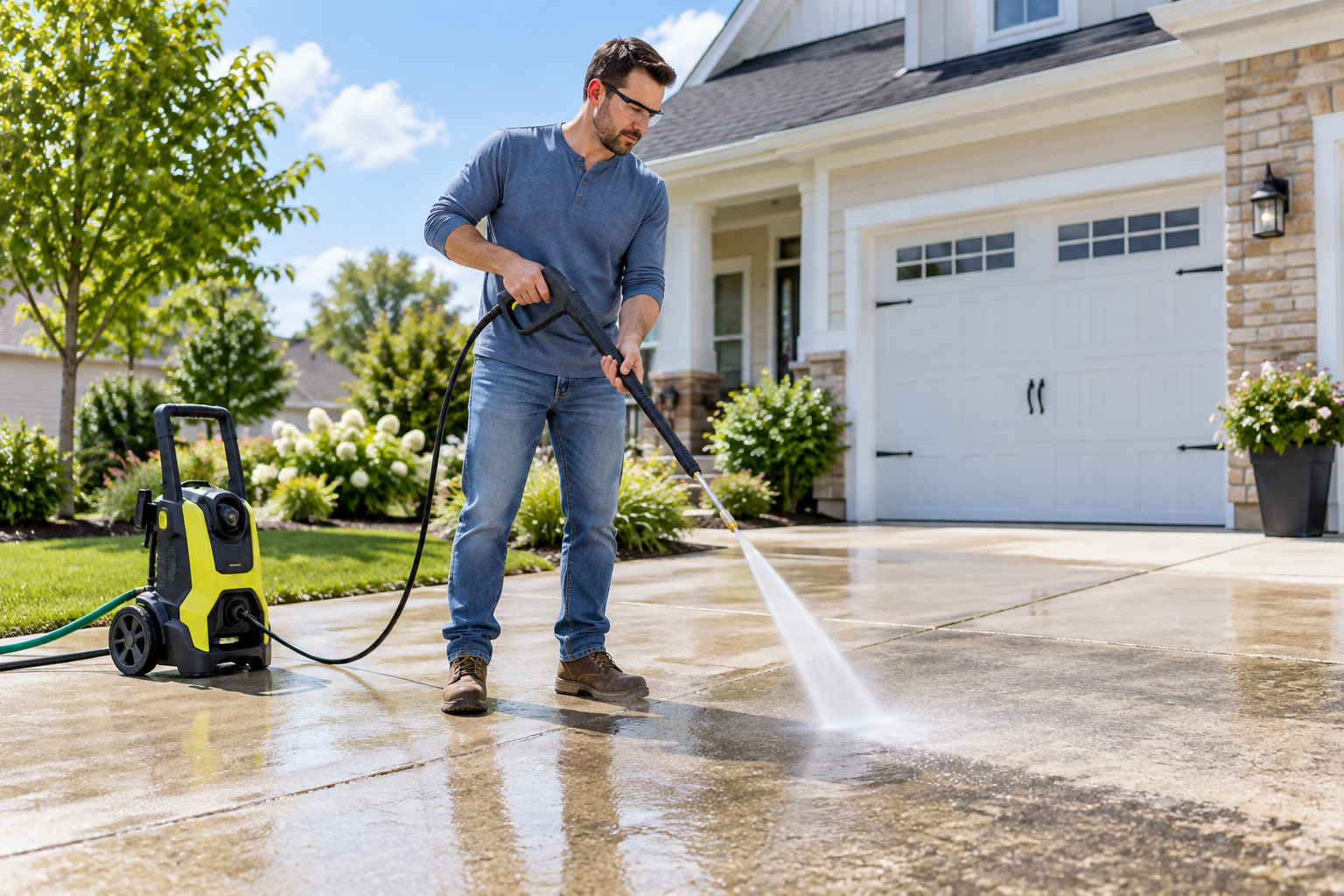
    A pressure washer is one of the most satisfying home-maintenance tools you can own.

    When it comes to cleaning driveways and patios, the difference between scrubbing by hand and using a pressure washer is dramatic. Dirt, mildew, grime, and seasonal buildup come off faster and with far less effort.

    For most homeowners, the best pressure washer is not necessarily the most powerful one. It is the one that gives you enough cleaning power for concrete and outdoor surfaces without becoming overly expensive, bulky, or annoying to use.

    Quick Picks

    Best Overall: DeWalt Electric Pressure Washer
    Best Value: Ryobi Electric Pressure Washer
    Best Compact Choice: Greenworks Electric Pressure Washer
    Best for Heavier Jobs: Simpson Gas Pressure Washer
    Best for General Home Use: Westinghouse Electric Pressure Washer


    Best Overall: DeWalt Electric Pressure Washer

    DeWalt has become a strong option for homeowners who want a solid balance of cleaning power, usability, and brand confidence.

    For driveways and patios, it lands in a useful middle ground: more than enough for regular home cleanup, without pushing buyers into a larger gas unit they may not need.

    Why we like it

    It fits the way most homeowners actually use a pressure washer — occasional but meaningful cleanup around the house.

    Best for

    People who want a dependable electric pressure washer for routine driveway, patio, walkway, and outdoor-furniture cleaning.


    Best Value: Ryobi Electric Pressure Washer

    Ryobi remains one of the easiest brands to recommend to average homeowners because it typically offers strong value and broad retail availability.

    If you want a pressure washer that performs well without stretching the budget too far, this is the kind of option that makes sense.

    Why we like it

    Good value matters with a tool that may only come out a handful of times each year. Ryobi usually lands in that sweet spot between too weak and too expensive.

    Best for

    Budget-conscious homeowners who still want a worthwhile upgrade over entry-level no-name machines.


    Best Compact Choice: Greenworks Electric Pressure Washer

    Some buyers want something that is easier to move, easier to store, and less intimidating than a larger unit.

    That is where Greenworks pressure washers often stand out.

    Why we like it

    A compact pressure washer is more likely to be used. If the machine is easy to pull out, set up, and store away again, it becomes much more practical for normal home ownership.

    Best for

    Smaller garages, townhomes, and homeowners who value easy storage and portability.


    Best for Heavier Jobs: Simpson Gas Pressure Washer

    If you have a large driveway, more stubborn staining, multiple concrete surfaces, or frequent heavier-duty outdoor cleaning, a gas pressure washer still deserves consideration.

    Simpson is a well-known name in that category.

    Why we like it

    Gas units generally offer more cleaning muscle and longer no-cord operation, which can matter for bigger jobs.

    Best for

    Larger properties, heavier buildup, and homeowners who want more raw cleaning power than typical electric models provide.


    Best for General Home Use: Westinghouse Electric Pressure Washer

    Westinghouse-style electric models often appeal to homeowners who want broad, everyday usefulness without getting too specialized.

    Why we like it

    This kind of machine works well for more than driveways and patios. It also fits general household cleanup, including siding, fencing, outdoor furniture, grills, and garage floors.

    Best for

    Buyers who want one electric pressure washer for a variety of home-maintenance jobs.


    How to Choose a Pressure Washer

    Electric vs gas

    For most homeowners, electric is the right place to start.

    Electric pressure washers are quieter, easier to maintain, and usually easier to store. They are ideal for patios, sidewalks, vehicles, and routine concrete cleanup.

    Gas makes more sense if you need extra cleaning power, longer runtimes, or plan to tackle larger and dirtier surfaces regularly.

    Think about how often you will use it

    If you only clean your patio and driveway a few times a year, an oversized unit probably is not necessary.

    If you are regularly cleaning several outdoor surfaces, a more capable model may save time and effort.

    Storage matters

    A pressure washer that is a pain to move and store often ends up neglected.

    Cord management, hose storage, wheel design, and overall footprint matter more than many buyers expect.

    Attachments can make a big difference

    For concrete cleaning, a surface cleaner attachment can make driveway and patio work much easier and more consistent than using a standard spray wand alone.


    Our Bottom Line

    For most homeowners, a good electric pressure washer is the smartest choice for driveways and patios.

    The DeWalt option gets the nod as best overall because it offers a strong balance of power, usability, and homeowner-friendly practicality.

    Ryobi stands out on value, while Greenworks is especially appealing if portability and storage are priorities.

    If you know you need more serious cleaning power, then a Simpson gas pressure washer is worth the extra size and maintenance.


    Frequently Asked Questions

    Is an electric pressure washer strong enough for driveways?

    Usually, yes. For most homeowners, a quality electric pressure washer is strong enough for normal driveway and patio cleaning.

    Do I need a gas pressure washer for concrete?

    Not necessarily. Gas is useful for larger or tougher jobs, but it is more machine than many homeowners need.

    What is the best accessory for cleaning a driveway?

    A surface cleaner attachment is one of the most useful accessories for concrete.

    How often should I pressure wash a patio or driveway?

    Usually once or twice a year is enough, though this depends on shade, climate, mildew, and how dirty the area gets.

  • Best Portable Tire Inflators for Cars and Trucks in 2026

    Best Portable Tire Inflators for Cars and Trucks in 2026

    Disclosure: This page contains affiliate links. As an Amazon Associate I earn from qualifying purchases.

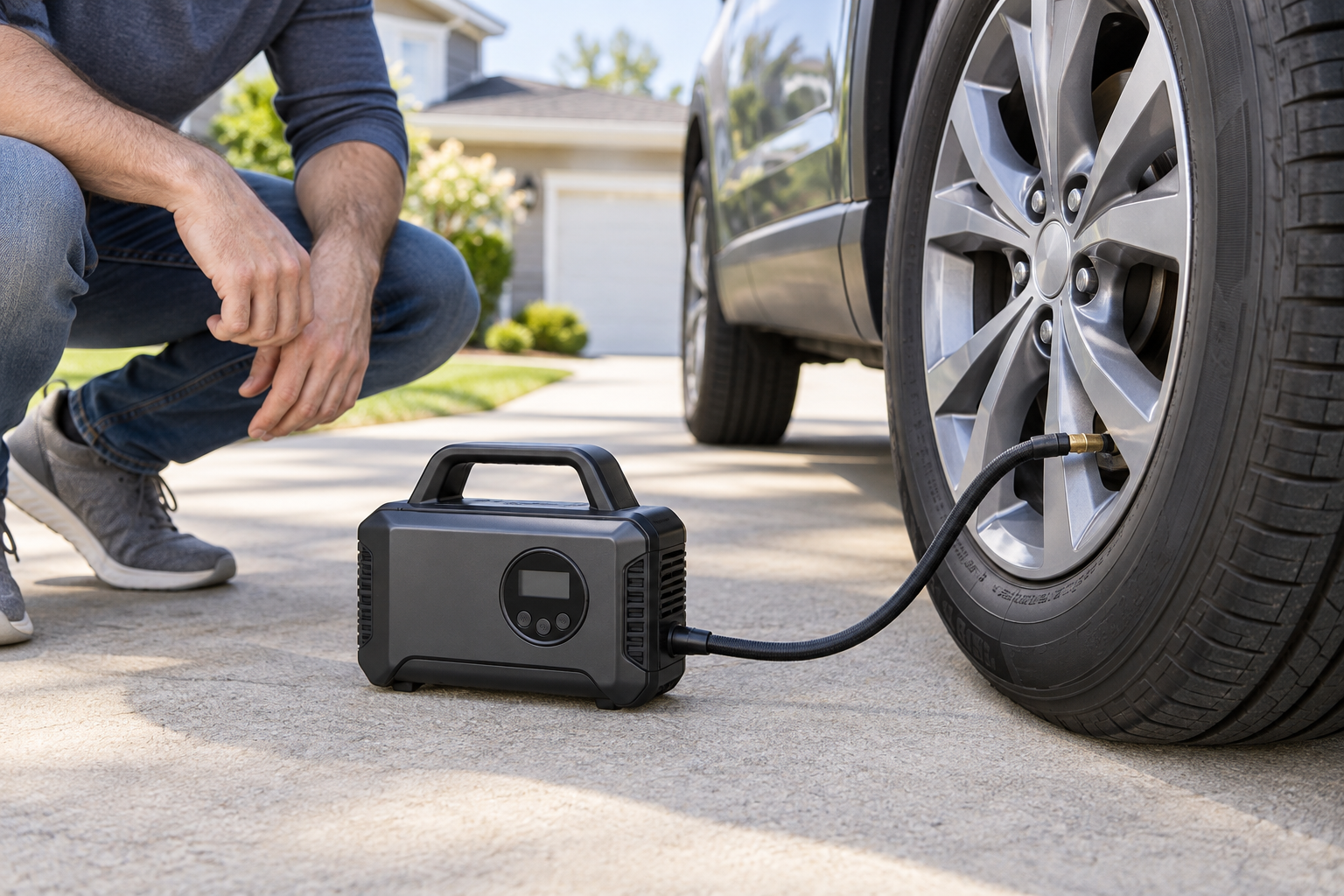
    A portable tire inflator is one of those tools most people do not think about until they really need one.

    A slow leak, a seasonal temperature drop, or a low-pressure warning light can quickly turn a normal day into an inconvenience. A good inflator lets you handle the problem at home instead of hunting for a gas-station air pump that may or may not work.

    For most people, the best portable tire inflator is the one that is easy to store, simple to use, and powerful enough for the kinds of vehicles they actually drive.

    Quick Picks

    Best Overall: DeWalt 20V MAX Inflator
    Best Value: AstroAI Portable Air Compressor
    Best for Battery Tool Owners: Milwaukee M18 Tire Inflator
    Best for Compact Storage: Fanttik Portable Inflator
    Best for Trucks and Larger Tires: VIAIR Portable Compressor


    Best Overall: DeWalt 20V MAX Inflator

    DeWalt’s inflator is one of the easiest overall recommendations because it is versatile, well-known, and practical for a wide range of users.

    It works well for topping off passenger-car tires, SUV tires, bicycle tires, sports equipment, and other everyday inflation tasks. If you already own DeWalt batteries, it becomes an even easier buy.

    Why we like it

    It strikes a good balance between portability and usefulness. It feels more substantial than the smallest inflators, but it is still easy to store in a garage, truck, or utility shelf.

    Best for

    Drivers who want one dependable all-around inflator that can handle routine tire maintenance without much fuss.


    Best Value: AstroAI Portable Air Compressor

    If your main goal is simply keeping a low-cost inflator in the car for routine tire top-offs, AstroAI-style portable compressors remain a practical option.

    These smaller inflators are usually affordable, compact, and simple enough for occasional use.

    Why we like it

    Not everyone needs a premium cordless tool-platform inflator. If you just want something inexpensive that can live in the trunk and help in a pinch, this is the kind of inflator that makes sense.

    Best for

    Budget-minded drivers who want a basic backup inflator for normal passenger vehicles.


    Best for Battery Tool Owners: Milwaukee M18 Tire Inflator

    If you already have Milwaukee M18 batteries in your garage, Milwaukee’s cordless inflator is one of the strongest ecosystem-based choices.

    That matters more than many people think. If you can buy the bare tool and use batteries you already own, the total value improves quickly.

    Why we like it

    It is convenient, cordless, and especially appealing for people already invested in Milwaukee tools.

    Best for

    Homeowners, DIYers, and truck owners already using the M18 platform.


    Best for Compact Storage: Fanttik Portable Inflator

    Some drivers care less about workshop-level performance and more about convenience.

    That is where compact inflators like Fanttik stand out. They are easy to toss into a glove box, center console, cargo organizer, or travel bag without taking up much room.

    Why we like it

    Small size matters. A tool that is easy to carry and easy to keep nearby is more likely to be used.

    Best for

    People who want an inflator that is especially travel-friendly and easy to stash in the vehicle.


    Best for Trucks and Larger Tires: VIAIR Portable Compressor

    If you drive a truck, larger SUV, trailer setup, or frequently deal with higher-volume tires, stepping up to a more serious compressor can be worth it.

    That is where VIAIR-style portable compressors earn their reputation.

    Why we like it

    They are better suited for heavier-duty work than many compact consumer inflators. They are not as convenient as the smallest units, but they are often the better choice when vehicle size goes up.

    Best for

    Truck owners, off-road users, trailer owners, and anyone who needs more than occasional light-duty inflation.


    What to Look for in a Portable Tire Inflator

    1. Power source

    Some inflators plug into a 12V outlet in the vehicle. Others run on cordless tool batteries. A few offer multiple power options.

    If you already use a battery platform like DeWalt or Milwaukee, buying within that ecosystem often makes the most sense.

    2. Vehicle size

    A compact inflator may be perfectly fine for a small sedan.

    It may not be the best choice if you routinely inflate larger truck or SUV tires.

    3. Speed vs convenience

    The smallest inflators are often the easiest to store, but not always the fastest. Larger inflators take up more space but may save time and frustration.

    4. Ease of use

    Look for clear controls, readable pressure displays, automatic shutoff, and a hose setup that is not awkward to attach.

    5. Intended use

    Ask yourself whether you want a tool for:

    • emergency backup,
    • routine monthly tire maintenance,
    • truck and trailer use,
    • or general household inflation.

    The right answer changes the best choice.


    Our Bottom Line

    For most drivers, the DeWalt 20V MAX Inflator is the best overall choice because it combines convenience, everyday practicality, and broad appeal.

    If your main goal is keeping a lower-cost backup in the car, the AstroAI type of inflator is a very reasonable value.

    If you already own Milwaukee batteries, staying in the M18 ecosystem is often the smarter move than starting over.

    And if you have larger tires or heavier-duty needs, a VIAIR portable compressor is worth the extra size and cost.


    Frequently Asked Questions

    Is a portable tire inflator worth keeping in the car?

    Yes. Even if you only use it a few times a year, it can save time and help you avoid driving on underinflated tires.

    Are cordless tire inflators better than 12V inflators?

    Not always. Cordless inflators are more convenient, but 12V inflators can still be effective and often cost less.

    Can a portable inflator fill truck tires?

    Some can, especially heavier-duty models. Smaller compact inflators may work, but they tend to be slower and less ideal for larger tires.

    Should I buy a cheap inflator or a premium one?

    If it is just a backup for occasional use, a lower-cost model can be fine. If you plan to use it regularly, a better-built inflator is usually worth it.

  • Best Cordless Leaf Blowers for Homeowners in 2026

    Best Cordless Leaf Blowers for Homeowners in 2026

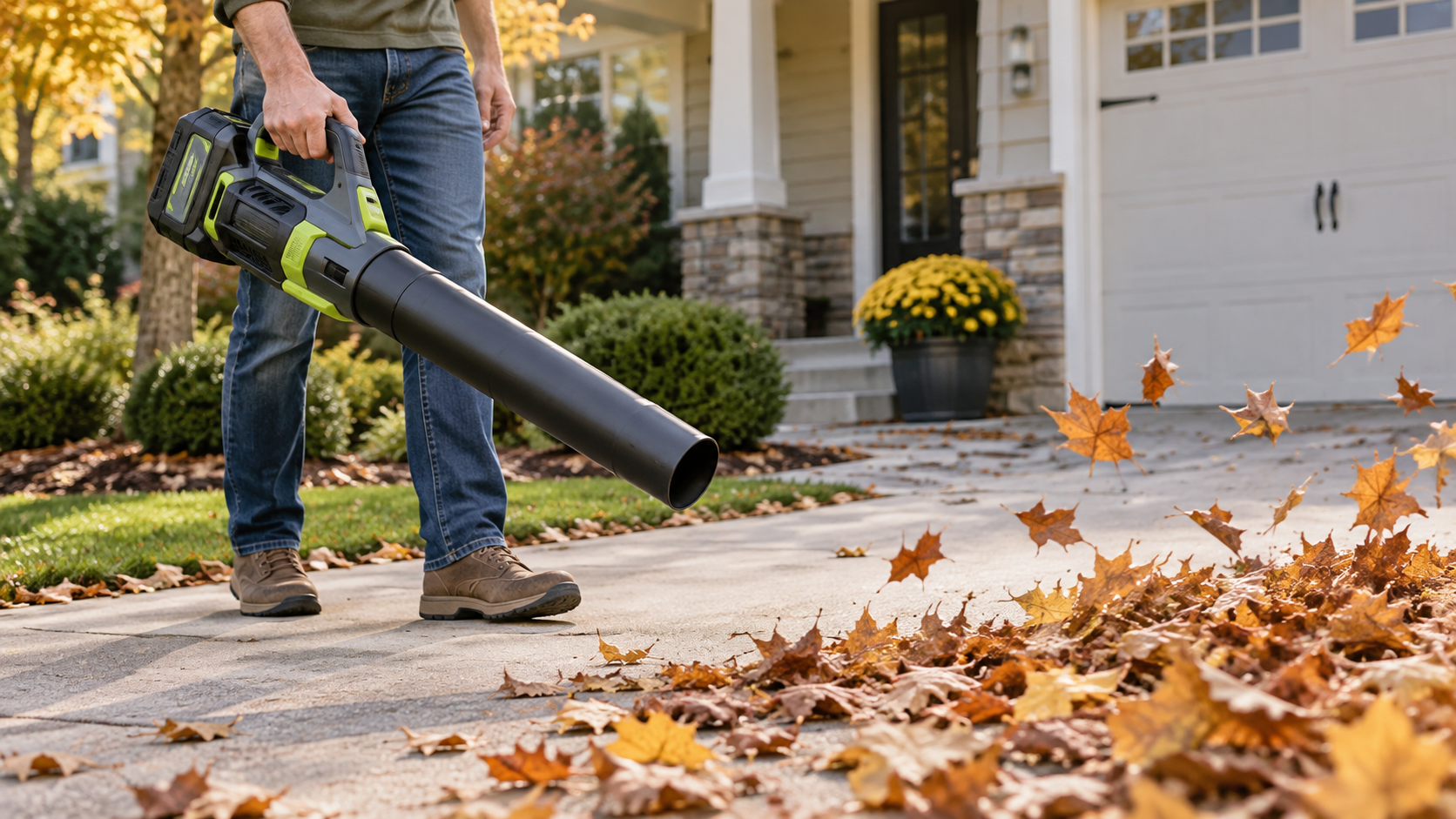
    Cordless leaf blowers have improved enough that many homeowners no longer need gas for routine yard cleanup.

    The challenge is that blower specs can be misleading if you look only at the biggest number on the box. CFM tells you how much air the blower moves, MPH tells you how fast that air is moving, and battery platform matters almost as much as either one.

    For most homeowners, the best cordless blower is the one that gives you enough power for your yard without forcing you into an expensive new battery ecosystem you don’t need.

    Quick Picks

    PickModelMax AirflowMax AirspeedBest For
    Best OverallEGO Power+ 765 CFM765 CFMUp to 200 MPHHomeowners wanting strong all-around performance
    Best ValueRyobi 40V HP 730 CFM730 CFMStrong performance at a lower tool-only price
    Best for DeWalt OwnersDeWalt 20V MAX XR DCBL724B550 CFM133 MPHAnyone already invested in DeWalt 20V batteries
    Best for Milwaukee OwnersMilwaukee M18 FUEL 3017-20500 CFM120 MPHRoutine cleanup within the M18 ecosystem
    Best Heavy-Duty AlternativeGreenworks 80V 750 CFM Backpack750 CFM180 MPHLarger properties and heavier debris

    Specifications are manufacturer-rated. Runtime and real-world performance vary with battery size, speed setting, debris, and operating conditions.


    Best Overall: EGO Power+ 765 CFM

    The EGO 765 CFM blower is the strongest all-around choice here for a homeowner who wants serious cordless performance without stepping into commercial equipment.

    EGO rates it at up to 765 CFM, with airspeed reaching 200 MPH, and its 2026 catalog lists the tool at about 4.6 pounds without the battery. EGO also rates it for IPX4 weather resistance and pairs the kit version with a 5.0Ah battery.

    Why we like it

    It gives you enough airflow for heavier leaf cleanup while still being a conventional handheld blower. The 56V platform is also built around outdoor-power equipment, so the battery can carry over to mowers, trimmers, chainsaws, and other yard tools.

    Potential downside

    If you do not already own EGO batteries, buying into the platform costs more than purchasing a bare tool from a system you already use.

    Best for

    Homeowners who want one strong cordless blower that can handle both routine cleanup and heavier seasonal leaf work.


    Best Value: Ryobi 40V HP 730 CFM

    Ryobi’s 40V HP 730 CFM blower delivers a lot of airflow for the money.

    Ryobi lists the RY404010BTL at 730 CFM, and the tool-only version is currently listed by Ryobi at $229. Ryobi also says its 40V platform works across more than 85 products.

    Ryobi markets the model as part of its Whisper Series and says it is substantially quieter than comparable gas equipment. The company also offers a kit configuration with two 4Ah batteries.

    Why we like it

    The combination of high airflow and a broad homeowner-oriented battery ecosystem makes it a strong value proposition.

    Potential downside

    The 40V battery system is separate from Ryobi’s popular 18V ONE+ platform. If all your existing Ryobi tools are 18V, you are still starting a second battery system.

    Best for

    Homeowners who want near-premium blower power without paying premium-system pricing.


    Best for DeWalt Battery Owners: DeWalt 20V MAX XR DCBL724B

    If you already own DeWalt 20V MAX batteries, the DCBL724B is one of the easiest recommendations on this list.

    DeWalt rates the current XR model at 550 CFM and 133 MPH. It uses a brushless motor and includes both concentrator and sweeper nozzles. DeWalt also lists up to 17 minutes of runtime at full speed when used with a DCB208 battery.

    Why we like it

    Battery compatibility can outweigh raw specifications.

    If you already have several DeWalt batteries and chargers in the garage, purchasing a bare blower can be much more economical than buying into a completely different outdoor-power platform.

    Potential downside

    At 550 CFM, it does not move as much air as the EGO or Ryobi models above.

    That matters more if you routinely deal with large piles of wet leaves rather than grass clippings, dry leaves, driveway debris, or garage cleanup.

    Best for

    DeWalt owners who want a capable blower without adding another charger and battery family.


    Best for Milwaukee Battery Owners: Milwaukee M18 FUEL 3017-20

    Milwaukee’s M18 FUEL 3017-20 is aimed more at fast cleanup than maximum brute-force leaf removal.

    Milwaukee rates it at 500 CFM, 120 MPH, and 12.2 newtons of blowing force. The tool reaches full throttle in under a second, and Milwaukee lists the bare-tool weight at approximately 5.1 pounds.

    Why we like it

    The M18 platform is enormous.

    If you already use Milwaukee tools, the ability to use batteries you own may be more valuable than another 150 or 200 CFM on a spec sheet.

    It is also relatively quiet for a powerful handheld blower, with Milwaukee rating it at 54 dB(A) under its stated test conditions.

    Potential downside

    If you are starting from scratch and your main goal is simply maximum leaf-moving ability, other platforms offer more airflow.

    Best for

    M18 owners who need dependable driveway, patio, garage, grass-clipping, and routine yard cleanup.


    Best Heavy-Duty Alternative: Greenworks 80V 750 CFM Backpack Blower

    For larger yards, Greenworks offers an 80V backpack blower rated at 750 CFM and 180 MPH.

    The 80V model uses a brushless motor, variable-speed trigger, turbo mode, and cruise control. Greenworks also offers versions bundled with either a 4Ah or 8Ah battery, and states that the battery works with more than 75 tools in its 80V system.

    Why we like it

    A backpack design moves the battery and much of the weight off your hand and wrist.

    That can become important if your property requires extended blower use rather than five minutes of driveway cleanup.

    Potential downside

    It is larger, more expensive, and less convenient for quick grab-and-go jobs than a handheld blower.

    Best for

    Larger properties, longer cleanup sessions, and homeowners who regularly deal with heavier seasonal debris.


    How to Choose a Cordless Leaf Blower

    CFM matters more than most people realize

    CFM — cubic feet per minute — measures the volume of air the blower moves.

    Higher CFM generally helps move larger piles of leaves and clear wider areas.

    For ordinary residential cleanup, roughly 450–600 CFM is already useful.

    Once you get into the 700+ CFM range, you are moving into much stronger homeowner equipment.

    MPH is only part of the story

    MPH measures airspeed.

    High MPH can help loosen stubborn debris, but a very fast narrow air stream does not necessarily move a big pile of leaves better than a machine with greater overall airflow.

    That is why we would not choose a blower solely because its MPH number is highest.

    Your existing batteries can change the answer

    This may be the most important buying consideration.

    Suppose one blower costs $199 tool-only while another supposedly “better” model costs $249.

    If you already own three compatible batteries for the $199 blower, the real price difference may be much larger than $50 because the other tool also requires a battery and charger.

    For many homeowners, staying within an existing battery system is the smartest purchase.

    Think about what you actually blow

    For:

    Driveways, patios and grass clippings:
    You probably do not need the most powerful blower available.

    Average suburban yards:
    A mid- to high-powered handheld unit usually makes sense.

    Heavy fall leaves or larger properties:
    Look toward 700+ CFM machines or backpack designs.

    Wet leaves and stubborn debris:
    Higher airflow and concentrated airspeed become more important.


    Our Bottom Line

    For someone starting from scratch, the EGO 765 CFM is the strongest all-around choice in this group.

    For value, the Ryobi 40V HP 730 CFM gives homeowners a lot of performance without jumping into the highest price tier.

    But if you already own a pile of DeWalt or Milwaukee batteries, we would think seriously before changing platforms just to gain more airflow.

    The best cordless blower is not automatically the one with the highest number.

    It is the one with enough power for your property, at a reasonable total cost, in a battery system that makes sense for you.


    Frequently Asked Questions

    How much CFM does a homeowner really need?

    For ordinary driveway, patio and small-yard cleanup, roughly 400–600 CFM can be plenty. Larger yards and heavier leaf cleanup benefit from 600–750+ CFM.

    Is a cordless blower as powerful as a gas blower?

    High-end cordless blowers can now provide airflow comparable to many homeowner gas blowers. Runtime remains one of the main differences, especially when a blower is operated continuously at maximum power.

    Should I buy a tool-only blower?

    If you already own compatible batteries, usually yes.

    If you are entering a new battery ecosystem, compare the kit price, not just the bare-tool price.

    Is CFM or MPH more important?

    Both matter, but for moving piles of leaves, CFM is usually the more useful starting point. MPH becomes especially helpful for loosening stuck or wet debris.